It was definitely a fatality
3/5/20265 min read
It was...
....it was high school kids, it was that plow driver that always speeds, she must have been on her phone, the snow pile was too high, he was definitely drunk, they passed me yesterday at 80mph, he was swerving so bad it he must have been distracted by the dog in the front seat. It was the highway departments fault (they did, they didn't, they haven't), it was the pothole, it was the parked vehicle, it was the sun, it was definitely the utility company's fault, or maybe the tree company.
Well, I hope some of those reasons for accidents grabbed your attention. We need to have a talk about social media and very specifically about social media in a small town.
Accidents happen. They happen everyday and they happen to anyone. When they do, we provide just enough information via social media to let you be aware of road closures so that you can avoid a lengthy wait or an unexpected detour. We may also post a photo or two, which I will address further on.
First let's talk about the comments on social media when minimal accident information is posted. Almost as soon as we hit the "post" button the comments (and sometimes arguments) begin. The top few reasons (GUESSES) we see posted in the comments always come back to the same few assumptions. Speeding. Texting. Alcohol. Inexperience. Age. Aggressive operator. Weather.
We understand that as humans we are driven to have a reason for everything, an explanation for scary events, or an opportunity to project our own frustrations about driving, life, vices, or job.
As first responders we are able to say confidently that most of the social media assumptions are incorrect or incomplete. Accidents also happen because of mechanical failures, wildlife impacts, soft shoulder contact, fatigue, and momentary inattention for crazy reasons....there was a spider, a bee, I sneezed and sideswiped a mailbox. Technically, the National Highway Safety Administration statistics show that quite often an accident is made up of many small factors. For example; a tired driver who is anxious to get home, is following too closely, glances at the time on the display, and is unable to stop in time when traffic ahead changes.
Innocent Inattention is what I personally call it. It is not planned, it is not intentional, and every single driver does it at one point or another. Have you glanced at the radio to see the name of a new song? Have you focused on a new tractor in someone's field? Have you looked to see who is parked at the local watering hole or if the lumberyard has the free wood bin out? Did you see that turkey, eagle, osprey, moose, deer, or the town's favorite dog sleeping in his yard? Did you stop quickly for a turtle? Swerve to avoid getting roadkill guts on your tires? These are literally SECONDS of Innocent Inattention. Unfortunately, the vehicles around you may also be focused on anything else instead of the important road things like the divider line, the edge of the road, your brake lights or your directional. That is all it takes. Is there a possibility of other contributing factors, absolutely, but not always.
Accidents happen. All. The. Time.
When they do, we will respond. We will do our absolute best as we are trained to. We may not do what you would like or what you think should happen and some of our choices may confuse you, BUT, we have specific historical basis & experience tested reasons for doing so.
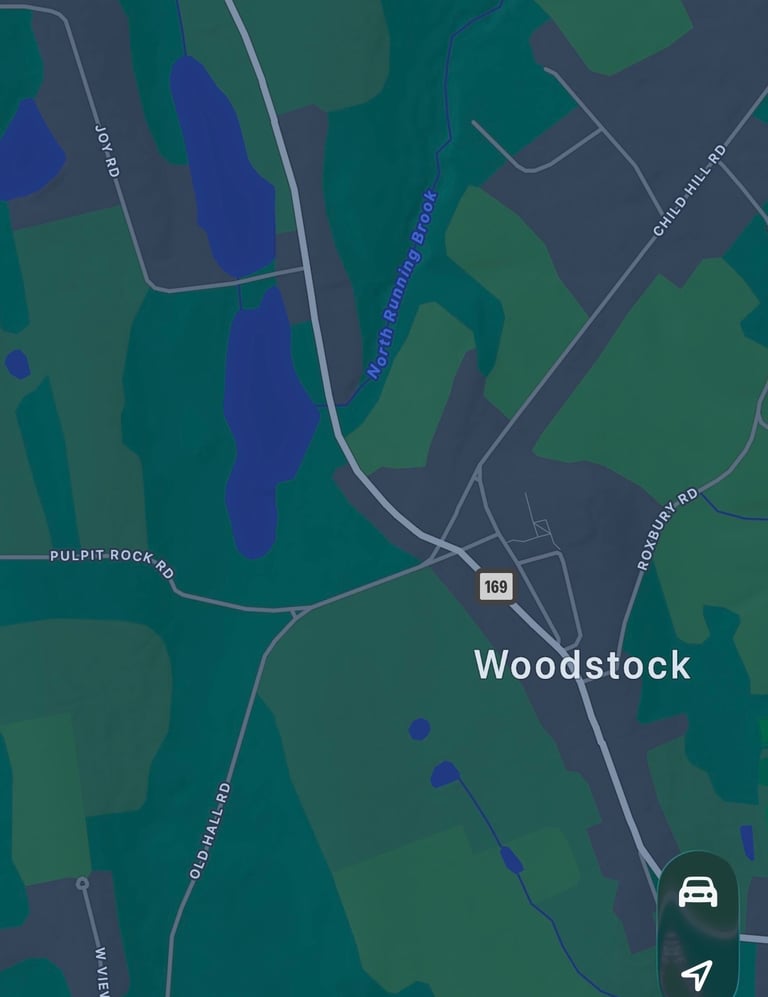
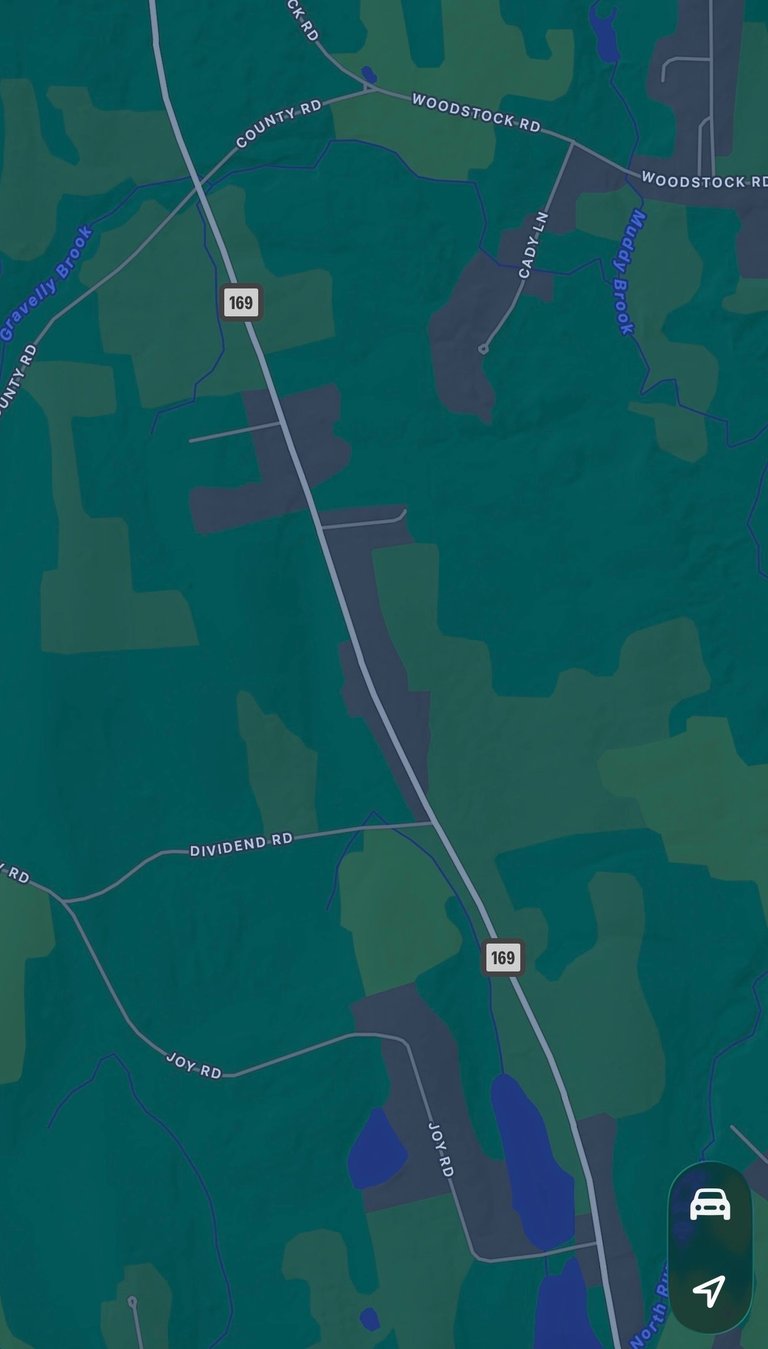
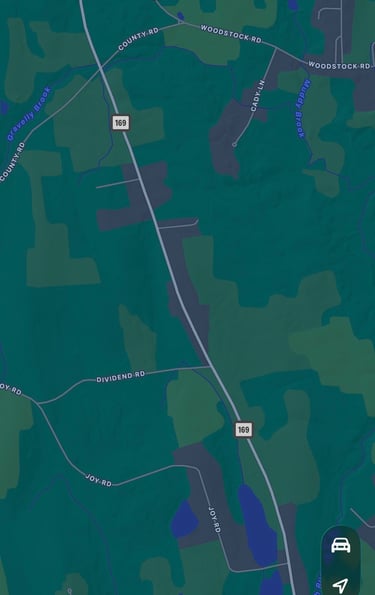
Let's start with road closures and detours. This can be a sore subject in our agricultural community because unlike the city, there are usually no quick around-the-block options. I will use a recent accident as an example. Last night we responded to a two car MVA right at Joy Road and Route 169. Our road closure and detour post was sent out to many different sites so that people could adjust their route. There were comments on several sites regarding the length of 169 that was closed. Our Officer in Command on any scene attempts to devise a detour using the closest cross streets. However, we routinely avoid dirt roads and local shortcuts, as we must consider all types of drivers, types of vehicles, and road conditions. As you can see in the attached map views the only main roads to detour traffic before and after Joy Road are Old Hall/Child Hill and County. These detours offer clean paved roads both East and West. The only other option here was Dividend Road which is absolutely not trailer truck friendly, a definite on our list of traffic considerations.
On another note, let's address the possible reasons we say, "the road will be closed for an extended period of time." Many, many times (okay, every time), someone will immediately comment that the accident must be fatal. Could that be true? Yes. However, there are so many other reasons for extended closures. We will list a few so that you do not have to automatically assume the worst. There may be an investigation for criminal activities, DUI, reckless, racing, vehicular assault, or hit & run. There may be a prolonged extrication, a landing zone need, or a mass casualty incident involving many organizations. There could be a serious haz-mat situation, cargo spill, or downed trees and lines. There could be significant infrastructure damage like bridge or guardrail impacts. There could be a heavy recovery operation like a rolled trailer truck, load transfer needs or a large debris field.
In some of the aforementioned, a specialized Connecticut State Police unit must be dispatched. They must travel a decent distance to get to the scene and that is in addition to any time that they may be tied up with other incidents. They investigate the scene utilizing drones, take many measurements, analyze vehicle position, skid marks and debris fields among other things. They may need time to interview all witnesses and wait for the wrecker(s). They are thoughtful, precise, technically educated and must complete a thorough investigation that will hold up in court if necessary.
So, as you can see there are so many different reasons for accidents and for road closures.
We would also like to talk specifically about our intentional information management on social media. Is it important for people to know that a road is closed and may be for some time? We do feel that it is. Do we sometimes post pictures from accident or fires. We do. With great intention and care. We make sure that the vehicle will be unrecognizable. We may filter color, blur plates, blur bumper stickers, even blur items hanging from the rearview mirror. We will blur fancy rims, company names and any humans in the background that are not official personnel. We want you all to see what happens to vehicles in accidents, even minor ones. How do vehicles absorb impact? Why is the road closed? Why do I hear sirens? We absolutely make every effort to protect the privacy of the people we assist.
Which leads us to what we will not do. We will not answer questions relative to identifications, patients, vehicle information or the like. We do see the comments on our posts and even if we know your speculations are dead wrong, we will not correct them. We will not tolerate comments that may be construed as bullying, accusatory or malicious.
We live and work and volunteer in a small town. We value your right to both privacy and information and we strive to maintain a transparent and open social media that encourages community participation.
We ask that you consider the following before commenting, is this comment helpful, is it factual and is it necessary?
Someday, may we see all the comments read as follows, "Maybe we should wait for facts."
Also, you could have an impact on all of this if you decided to volunteer....just saying.


We need your help
We are always looking for volunteers to help protect and serve our community. Visit our volunteer page for more details.
Contact
contact@woodstockfire.org
(860) 928-3163 Station Phone NON-EMERGENCIES
© 2026. All rights reserved.
911 FOR ALL EMERGENCIES
(860) 774-7555 QV Dispatch NON-EMERGENCIES